
sdOB13 @ Altes Schloss, Dornburg (Saale)
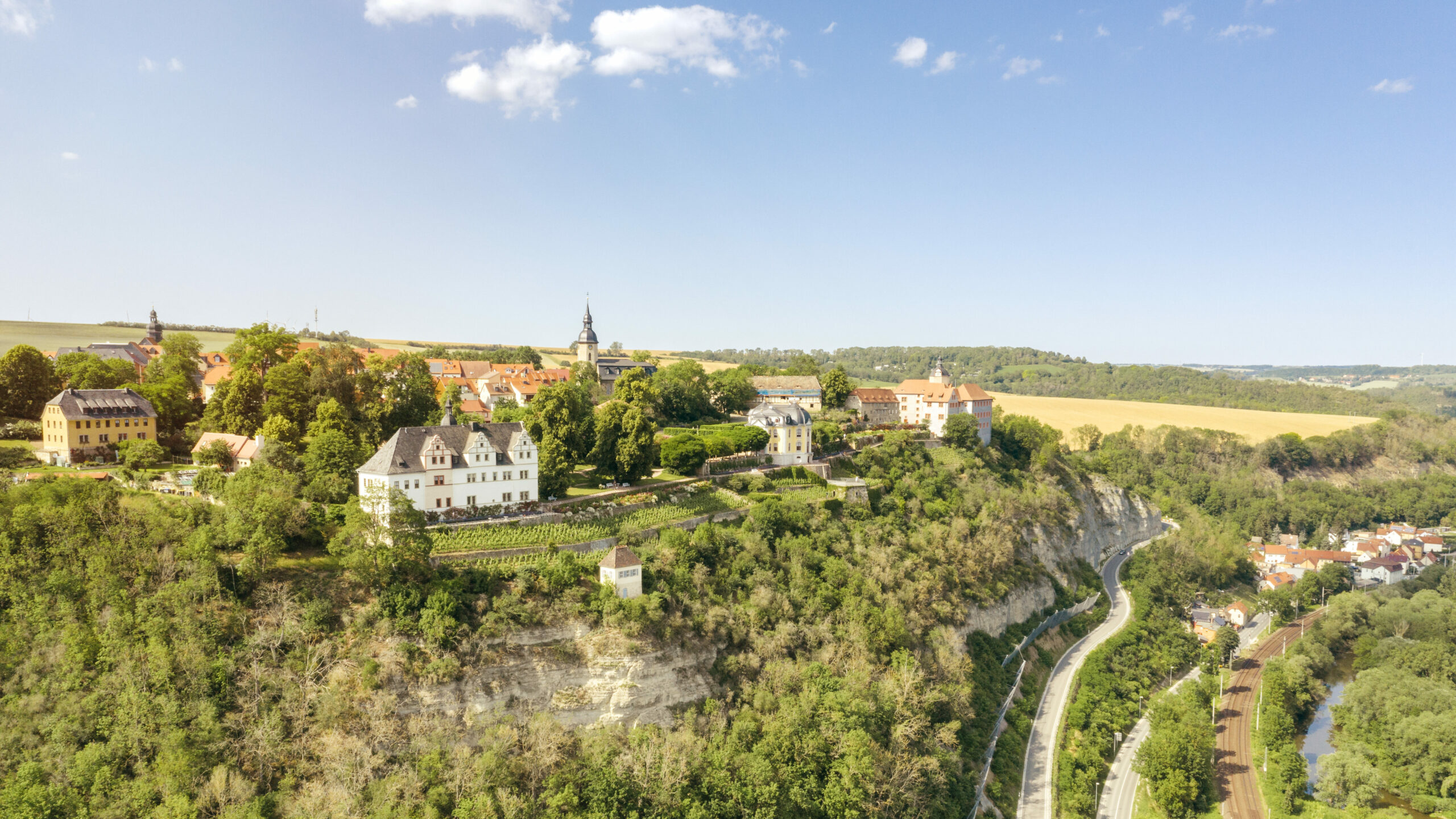
The conference will take place in the conference center in "Altes Schloss" Dornburg (Saale). More details how to reach it will be given in Travel.
Adress:
Max-Krehan-Straße 2
D-07774 Dornburg-Camburg
It can be easily be reached from Dornburg (Saale) train station either by walking or with the shuttle we will offer.
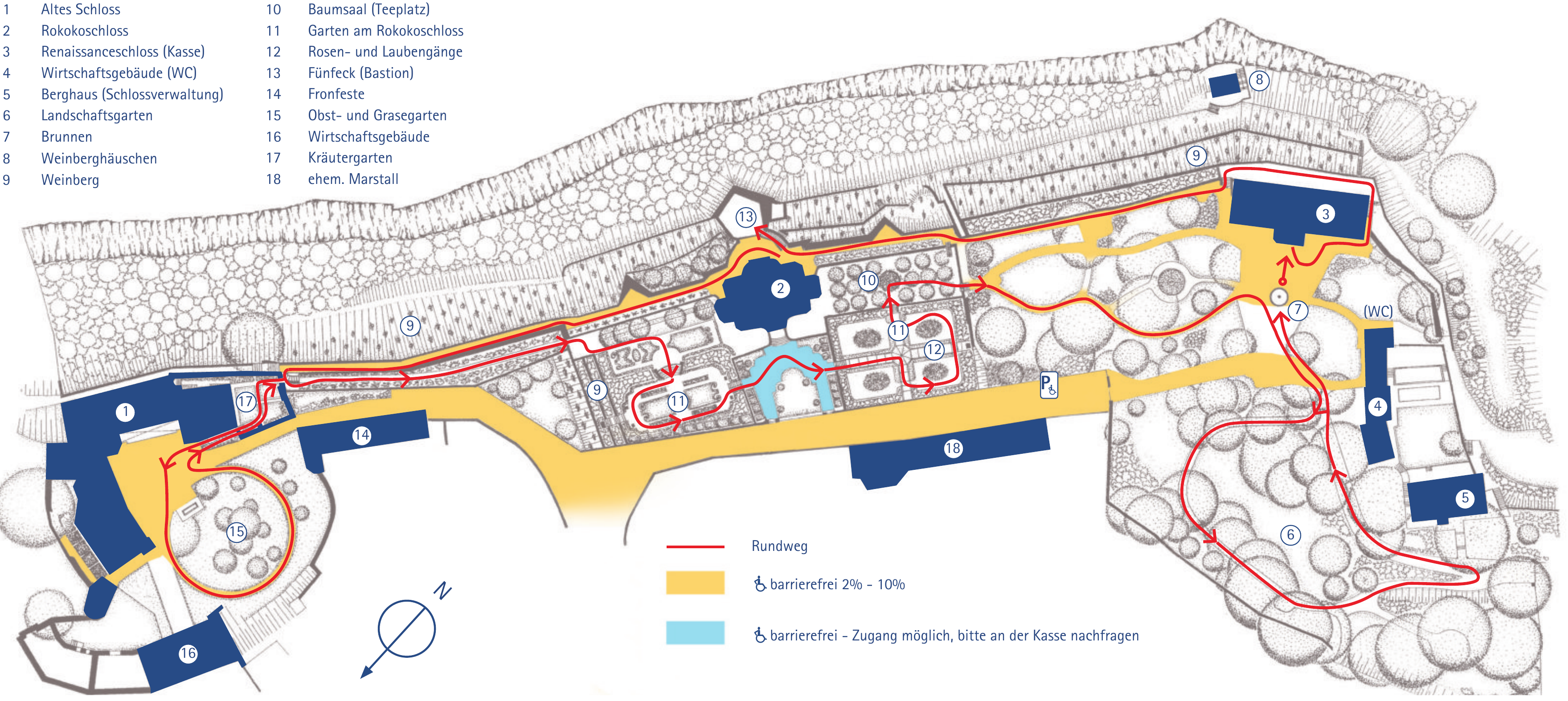
The origins of the Dornburg Palaces lie in a High Medieval castle complex at the northern end of the rocky ridge. In the 16th century, the Old Palace was built on its site, and around the same time the Renaissance Palace was added to the south. In the 18th century, the Rococo Palace was constructed between them, completing the impressive trio.
Originally, the palaces served very different purposes and were not part of a single ensemble. It was only in 1824 that Grand Duke Carl August of Saxe-Weimar-Eisenach purchased the Renaissance Palace, added it to the other two, and had them connected through a series of terraced garden landscapes.
Today, the Renaissance and Rococo Palaces, as well as the gardens, are open to visitors. The Old Palace is used as a conference center.
The Old Palace: From Medieval Stronghold to Conference Center
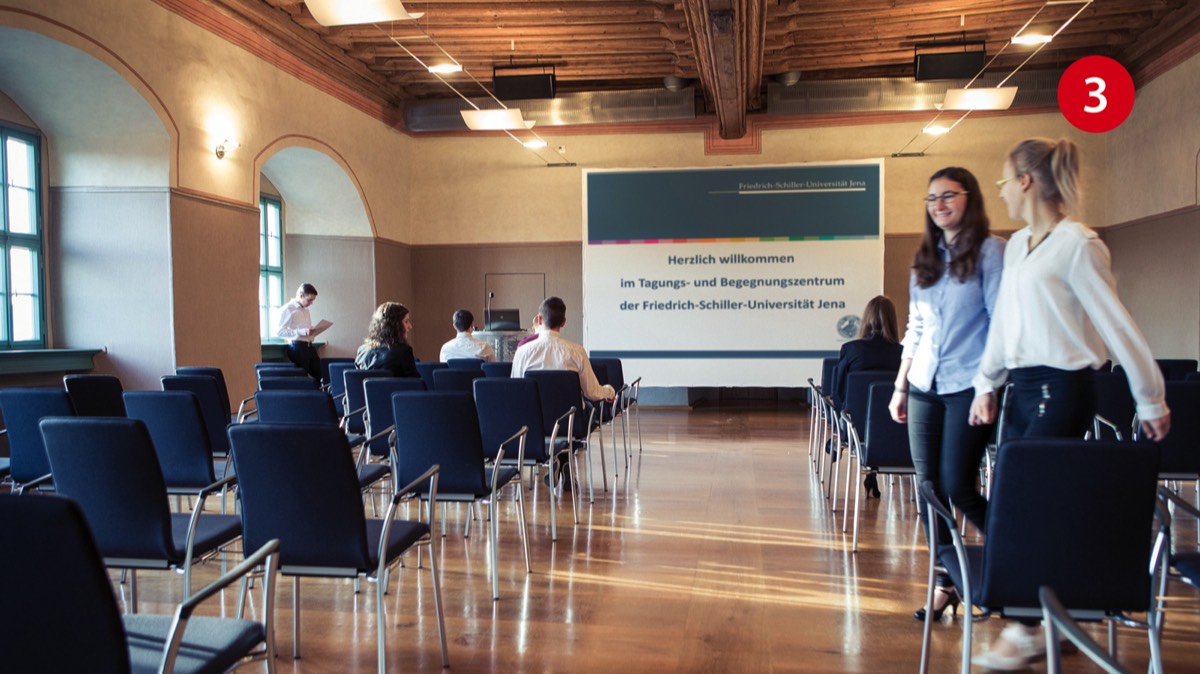
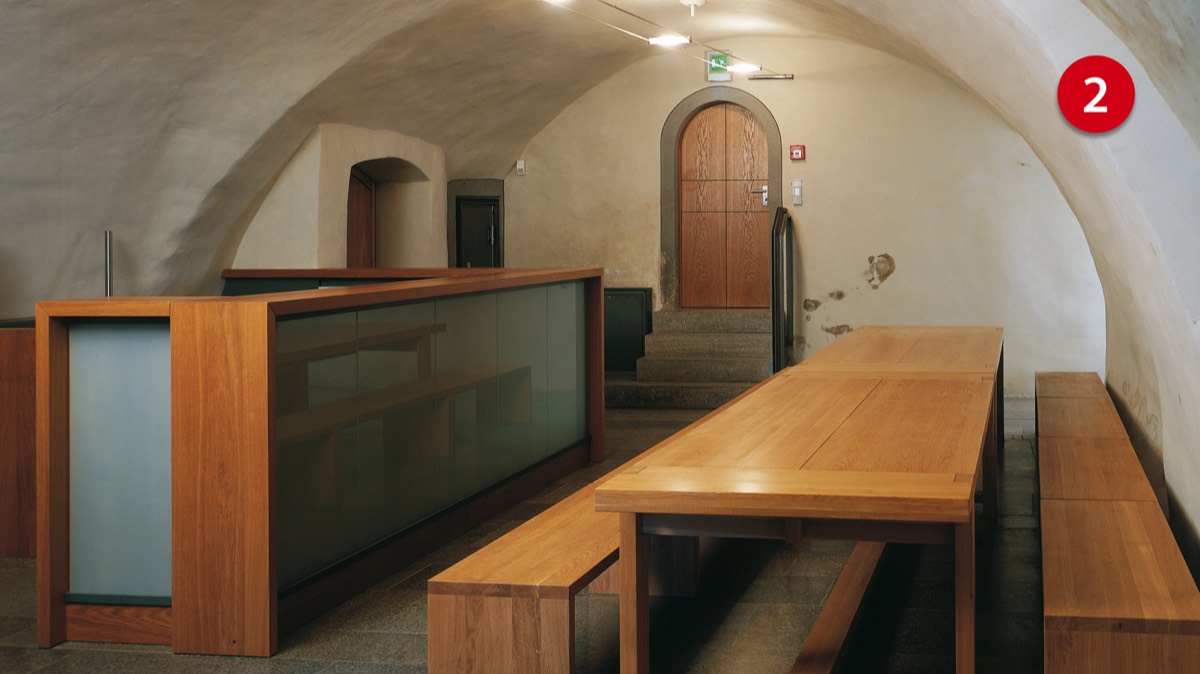

In the mid-16th century, the Old Palace took on the appearance it has today. It combines four structures from different periods, unified through consistent façade colors and window forms. The keep, for example, dates back to the 12th century. A late medieval Kemenate (heated living quarters) was also incorporated into the complex. By contrast, the south wing was newly built in the Renaissance style and contains two large halls. Alongside the impressive wooden ceilings, painted Renaissance ornamentation has been preserved.
The building served a variety of purposes well into the 20th century. Since 2004, the thoroughly renovated palace has been used as a modern conference center.
Goethe was here – the Renaissance Palace
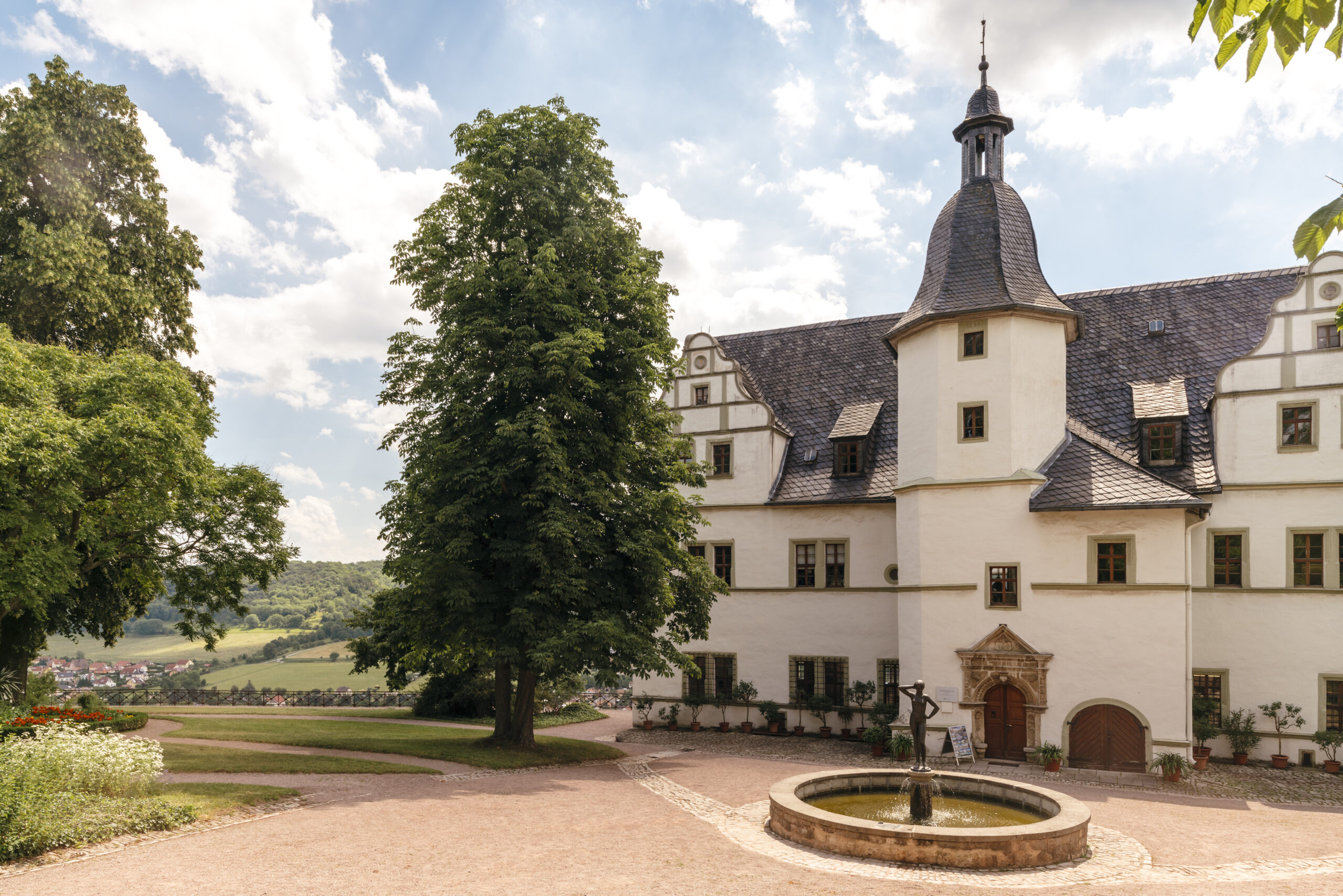
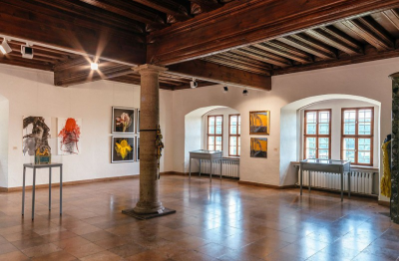

Strictly speaking, it was not a palace at first: the Renaissance Palace was built in the mid-16th century as a manor house. Its distinctive present-day appearance—with gabled dormers and a recessed portal—was added a few decades later. In 1824, Grand Duke Carl August purchased the building and incorporated it into the ensemble of his Dornburg summer residence. Renovations made it more comfortable, and the ruler himself stayed here during the summer months.
The palace became especially famous through Carl August’s friend and Privy Councillor Johann Wolfgang von Goethe. After Carl August’s death, Goethe withdrew to Dornburg in the summer of 1828 and lived for several weeks in the “Bergstube” (mountain room). Alongside numerous letters and research notes, he wrote a number of atmospheric poems there.
The castle gardens -- Thuringias balcony
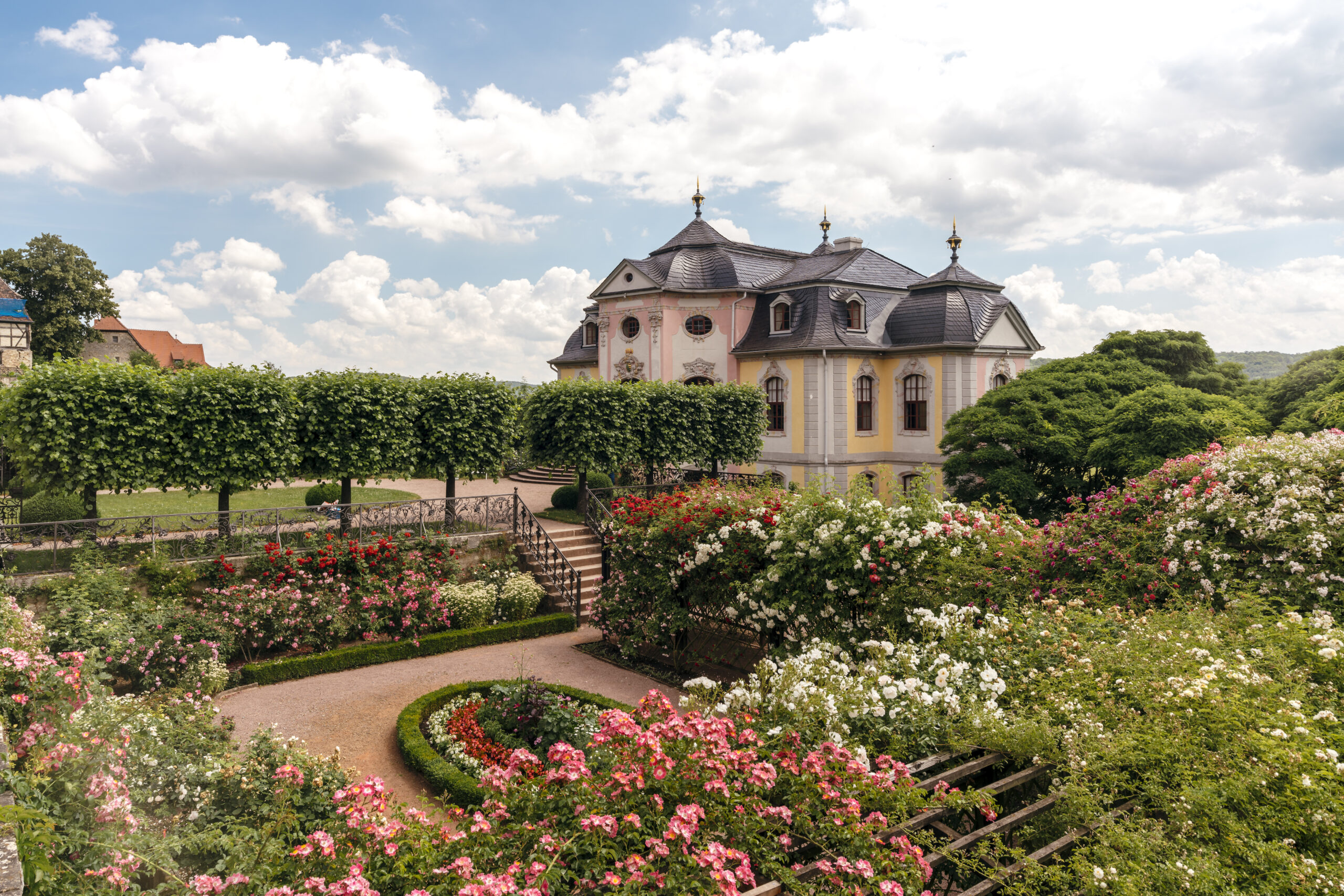
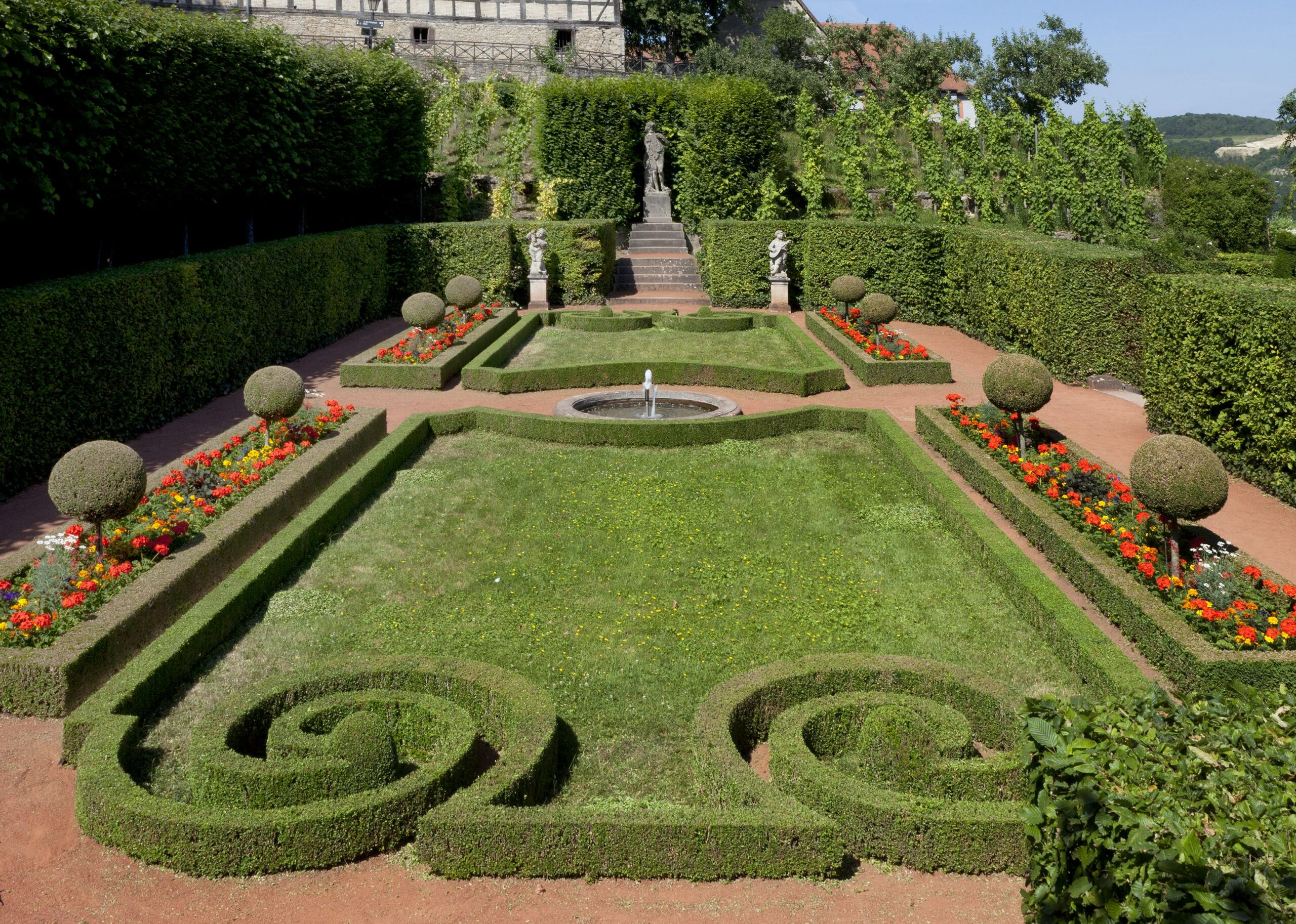
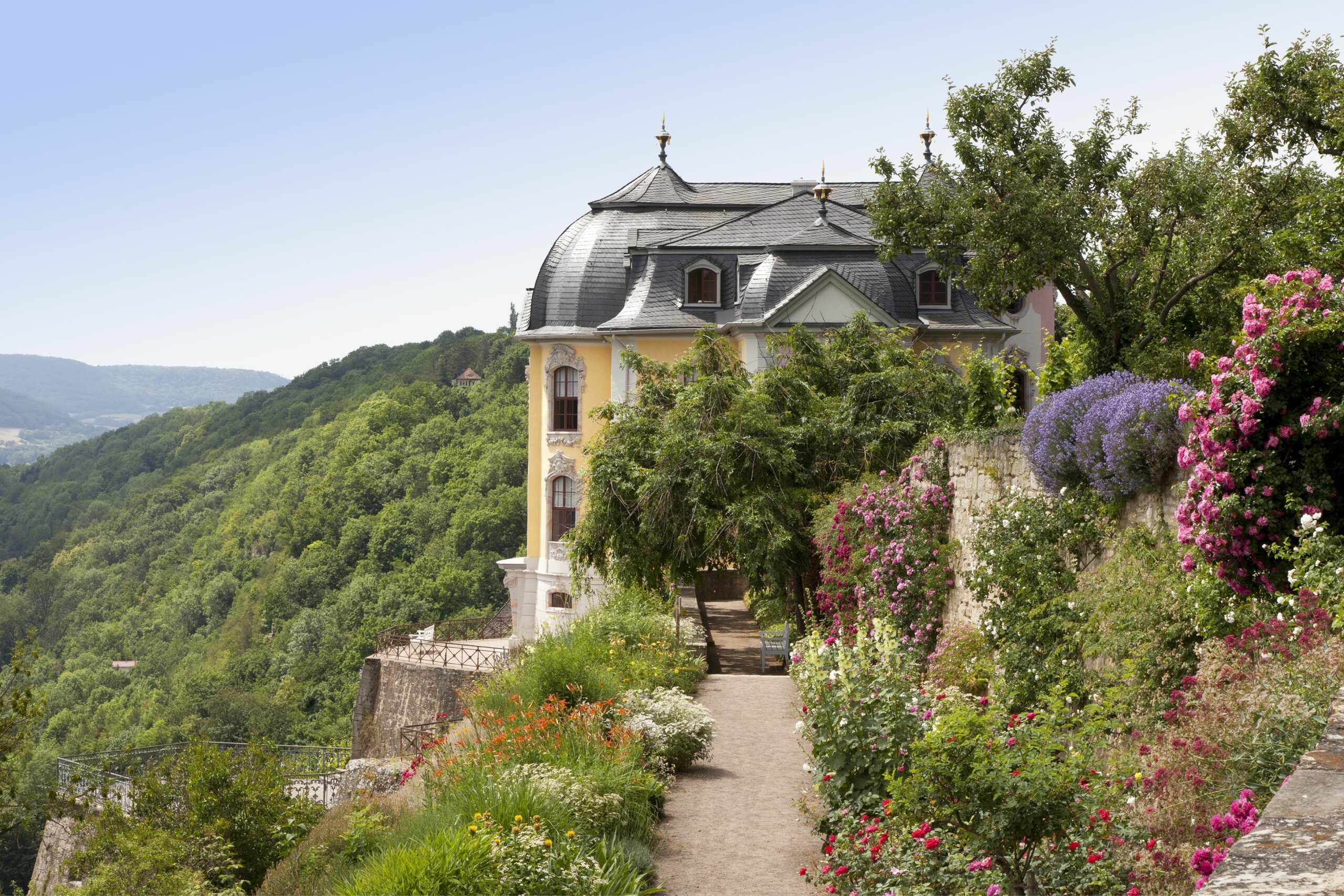
The Dornburg Palace Gardens cover around four hectares and include several distinct garden areas: the landscaped park by the Renaissance Palace, the formally designed geometric garden in front of the Rococo Palace, and the orchard and grass garden near the Old Palace. From 1736 onward, the steep slopes down to the River Saale below the palaces were converted into vineyards.
The first designs for the garden at the Rococo Palace date from 1735/36. In the early 19th century, additions included the Ash Walk (Eschengang), the tea lawn with the “acacias,” the rose arbor walk, and numerous rose trellises. From 1824, the garden designer Carl August Christian Sckell created the small landscaped garden by the Renaissance Palace—with winding paths, groups of trees and shrubs, and flowerbeds—for Grand Duke Carl August of Saxe-Weimar-Eisenach.
After initial restoration measures undertaken by the Goethe Society between 1926 and 1928, extensive renewal and reconstruction work followed from the 1950s onward. In 1966, the garden parterre northeast of the Rococo Palace was laid out anew according to the baroque-inspired design by landscape architect Hermann Schüttauf.